
Study Process
Here’s what’s happening behind the scenes.
Before trains can start rolling, there’s a lot of work that needs to happen, and years of effort have already brought us to this important next step. This study builds on all that progress. It’s not just a map and a dream; it’s a detailed, guided process that digs into everything from how many people might ride to how fast trains could go and what it would take to make it real.
Why Studies are important…
Studies turn a big idea into a real, build-able project
Studies Ensure decisions are based on data
Studies Help communities understand the benefits and costs
Study Overview
This study will ultimately determine…

the Train Route and How the Service will Run
how much it will likely cost to operate
How Many People Are Likely to Ride the Train
What Condition the Tracks Are In, What Fixes Are needed, and the cost
Which Management and Governance structure Will be most effective
How the service would grow from its initial phase into a fully developed rail line
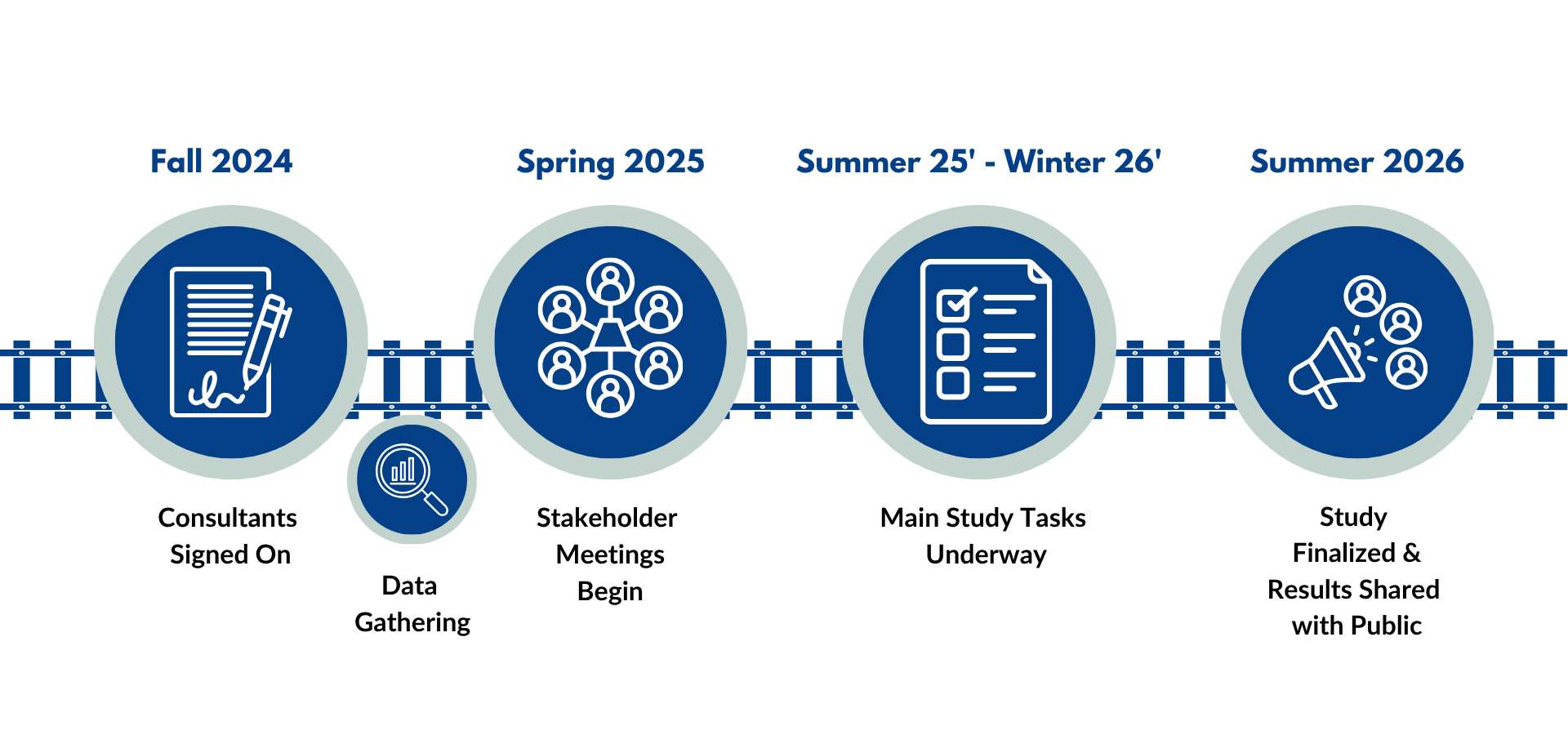
Study Timeline
Identified Needs
Connection
Many northern Michigan communities aren’t easily accessible without a car, leaving people without other travel choices and isolating parts of the state.
The Michigan North + South Passenger Rail Project is motivated by key transportation challenges facing the State of Michigan, including the need for enhanced mobility, economic competitiveness, and sustainable growth. Some identified needs from the study include:
Economic Opportunity
When travel is only possible by driving long distances, it limits workforce mobility, tourism, and growth. Rail could unlock new possibilities and opportunities for many communities.
Safety & Convenience
Harsh winters, long travel distances, and summer tourism traffic delays make driving exhausting and risky. Passenger rail would offer a reliable and more comfortable alternative.
Study Advisory Group
The Advisory Group is made up of representatives from communities along the proposed rail route, including at least one person from each city and a member of the local transit agency when a community has bus service. The group meets quarterly to hear updates on the study, stay informed about progress, and provide feedback.

Study Team

-
Community Lead
Groundwork is a nonprofit that works statewide to preserve the environment, strengthen the economy, and create healthy, thriving communities through a variety of programs.
In their Community Design program, they work to make transportation more efficient and people-centered.
The rail effort began as an idea that took shape during the 2009 Grand Vision planning process. As Groundwork participated in this citizen-led, long-term plan for land use, transportation, and economic development in northwest Lower Michigan, the concept of connecting the region by passenger rail emerged and sparked deeper exploration.
-
Grant Partner
Also known as WexExpress, they are the public transportation system for Wexford County, Michigan. They provide demand-response, door-to-door bus services within the Cadillac area and also offer routes to Traverse City. In addition to bus services, WexExpress operates a volunteer driver program that assists seniors, veterans, and people with disabilities with transportation throughout the state.
WexExpress holds and manages the grant funds for the North+South Passenger Rail Study.
-
Lead Consultant
WSP is one of the world’s leading engineering, environmental, and professional services firms.
WSP is working diligently to advance key components of the study. Currently, a significant focus of WSP’s work is on route modeling, a critical step that will help identify what the service could look like once it’s operational.