
What is the North + South Rail Project?
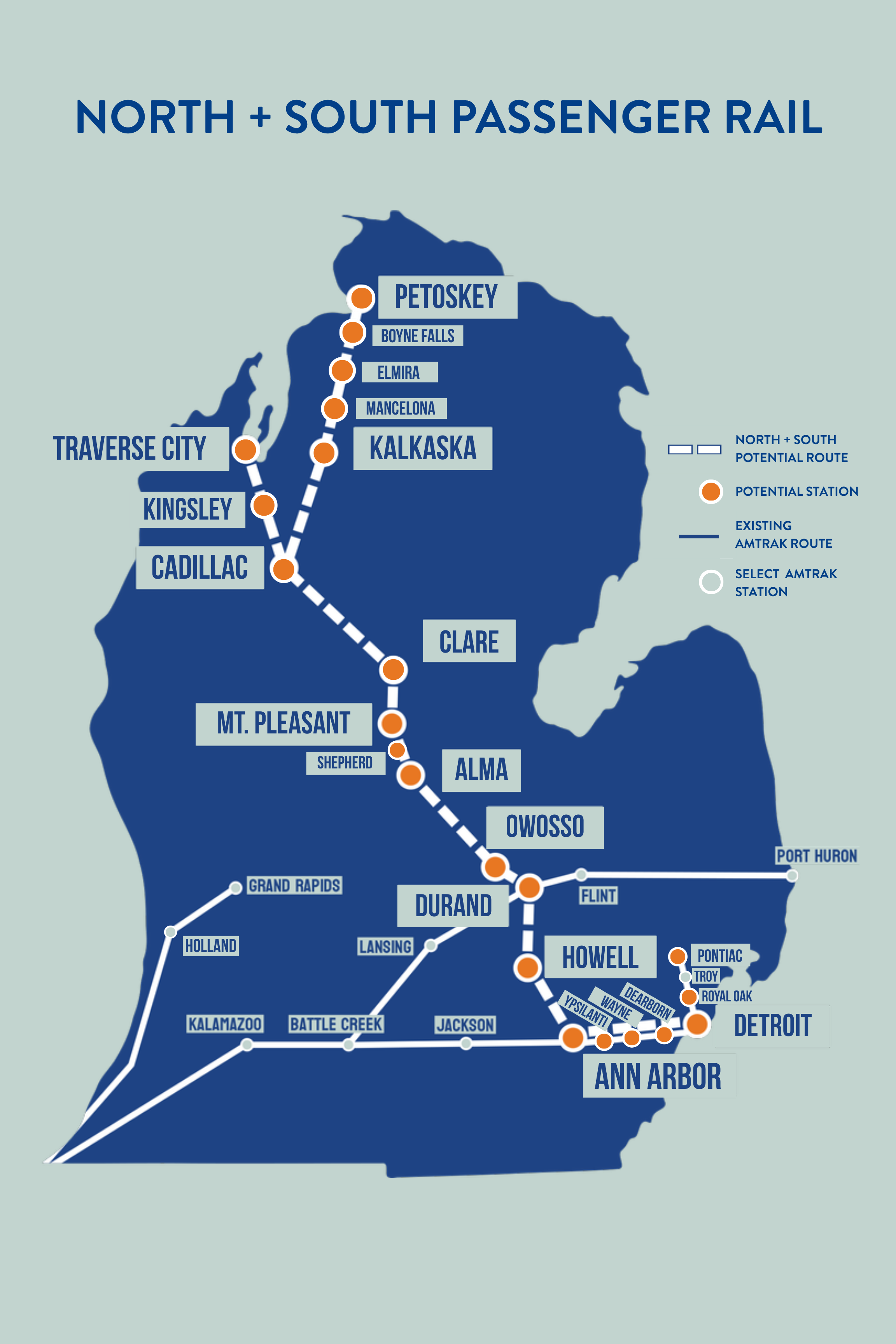
Michigan’s North + South Passenger Rail is a proposed train service connecting communities extending from Southeast Michigan, through Mid-Michigan, and on to the northwest Lower Peninsula.
The route would link Michigan’s dynamic regions with an efficient, comfortable alternative to driving. This project represents a major opportunity to create a more connected, inclusive, and sustainable transportation system that makes Michigan a more attractive and competitive place to live, work, and do business.
Using What We Already Have
This proposed rail line would run almost entirely on a state-owned rail corridor that already exists. Because the tracks are already in place, new construction would be limited, significantly reducing the complexity of the project. By building on infrastructure we already have, Michigan can deliver a high-impact mobility project in a smart, efficient way.
Why a train?
Right now, driving is often the only way to connect many Michigan communities, but driving comes with real challenges. The North + South Passenger Rail line would help address those by providing:
stress-free alternative to long highway drives

Safe transportation year round

More accessible travel for people without a car
Improved access to universities and healthcare


boost to local economies along the route

Time to relax, work, or connect during the trip

climate-friendly TRAVEL that reduces emissions

What’s Happening?
After a feasibility study was initiated by Groundwork and completed in 2018, the project team was awarded a Federal USDOT grant in 2022 and worked to produce an in-depth service plan for the route. The new study dug into things like route, service options, costs, and an implementation plan – laying the groundwork for future construction and launch. The study was completed in the summer of 2026 and can be found on the Library page.
Part of Michigan’s

Future
The North + South Passenger Rail is included in the State’s Michigan Mobility 2045 Plan as a potential future route, and the rail has seen broad community support.
The project secured both State and Federal Funds to complete a service planning study, which wrapped up in 2026.
Rail is an essential part of Michigan’s future. By investing in modern train service, we can strengthen our economy, create new opportunities, and keep Michigan moving forward.
FAQs
-
It’s still too early to put a date on it. We are currently completing a detailed planning study, which will give us a clearer sense of the implementation timeline.
Looking ahead, the project will need to move through several major phases, such as engineering, environmental review, and ultimately construction (including rail upgrades and safety technology). Each phase carries its own timeline, some extending over multiple years.
-
The route follows a mostly state-owned existing rail line, which helps lower costs and speed up implementation.
Key stops on the existing rail line are being evaluated to serve as regional hubs that would connect people to the broader passenger rail system in Michigan and the U.S. As the network grows, future extensions or connecting services could bring more communities into the system.
-
The train is expected to have an average speed of 80 mph (with some areas along the Amtrak Wolverine route in SE Michigan topping 110 mph). Under the current design, total travel time will be about 4 hours and 30 minutes from Detroit to Traverse City. That’s competitive with driving – but safer, more relaxing, and more productive.
-
Ticket cost depends on many factors (eg. how far you are traveling, day of the week, season, type of seat, etc.).
For one reference point, the cost of a ticket from Detroit to Chicago on Amtrak is typically around $40.
The goal is to keep prices affordable and competitive.
-
The 2026 study estimates that a single-branch route from Southeast Michigan to Traverse City could draw between 72,000 and 214,000 riders annually with two daily round trips. A two-branch option from Southeast Michigan serving the northern cities of Traverse City and Petoskey could draw between 196,000 and 579,000 riders annually with a combined four daily round trips between the two branches.
-
Last-mile connections are key! A number of the communities along the route are already walkable and bike-able, and offer a range of transportation options like bus transit and rental cars.
Other stops may be more rural or less connected today – but that’s where this project creates new opportunities. By bringing consistent train service to these areas, communities can invest in better local mobility options like shuttles, bike rentals, or seasonal transit.
Other states have done this well. Maine’s Downeaster connects to coastal trolleys. Colorado’s Winter Park Express brings visitors straight to ski lifts. and California’s Capitol Corridor links with local buses and ferries. Passenger rail helps tie it all together and gives communities a reason to make those connections easier.
Transit providers that operate buses in the communities being considered for stops are engaged in this effort, and many of them serve on the project’s Advisory Group.